
Wednesday, October 15, 2014

Tuesday, September 28, 2010
logically!
i shall enumerate a few key reasons why everyone should study logic.
first, and most importantly, why we should all study logic because it is good to study logic.
secondly, back in high school, i had an art teacher who said that logic is the best way to develop one's mind.
also, she knew a guy who studied logic in college who went to make millions of dollars, so clearly, the surest way to success in life is to study logic.
on the flip side, there was a guy who didn't take logic in school, given the opportunity, and he wound up being killed by a gang two years later.
in conclusion, you should study logic. or else...!
Saturday, September 18, 2010
a ponder to question
concerning gregorian chanters--what did greg do that drove so many people to cast spells on him?
Wednesday, August 25, 2010


Friday, August 6, 2010
why give a damn
i read mortimer adler's ten philosophical mistakes. it's a great book by a great mind. basically he outlines what he sees as ten major areas in which modern and contemporary philosophy 'get it wrong' and readjusts them with a more or less aristotlean perspective.
anyway, one of the chapters regards the idea of a human nature, specifically that most modern philosophy would say that there is no such thing as human nature. if you look at any species there are certain characteristics, instincts, and predispositions in its behavior. all dogs act like dogs, all bees do generally the same thing. humans, however, have no common behavior practices, i.e., from one culture to another, from one era to another, there are vast differences between, v.g., social hierarchy and political organization, manners and etiquette, language structure (even sounds), 'common sense', taste preferences, means of offense and the list goes on.
since there's no discernible (diZZZZernible, for you certain friend) common trait it is supposed that there is no human nature (a quick side note, which bears repeating, is that most proponents of the 'no human nature' idea are also ones who would say that humans aren't a different kind of animal, rather we are only different in degree [i.e., in the evolutionary process], but, since all other animals do have discernible common traits, and, in their understanding, we don't, wouldn't that make us of a different kind?).
adler goes on to say that we do have a human nature, and our common human behavioral trait is one of potentiality. his meaning is that, while europeans and africans and malaysians may all have different behavioral traits, none of the people started off with them, and if a malaysian baby happened to grow up in africa, with african parents, it would have adopted all of the behaviors, thinking, and preferences (even language and tones) of the specific african people with which it grew up.
personally, i think america is itself the prime proof of this--multifarious ethnic traditions have given way to the western tradition in this, the great melting pot (even proponents of 'the great tossed salad' label couldn't argue that, while many people may have maintained much of their traditional heritage, the western mindset and ways have, by default of association and immersion, been picked up and worked into whatever culture was preserved in the immigration).
there's much more to this chapter and the implications of having a human nature, and it's definitely worth the read, but there's a specific tangent i ran with, with the help of my brilliant and insightful wife.
you know those people who take a good idea, however worthy the intentions, too far, specifically, those who can't handle someone having an issue with any facet of a different culture? here's what i mean--someone says 'i don't like thai people; their food is weird, the inflection in their language is like nails on a chalkboard, and what is with their need to serve?!' at which point someone else (rightly) interjects, 'hey, you're missing all of the beauty of those things--their food is a savory amalgam of spice and flavor, they practically sing while they talk, and a culture of service is what this world needs!'
well played. but here's where it goes too far: 'the general acceptance of prostitution, specifically the abduction and slavery of young village girls, and the prolific homosexual appetite are just parts of their culture. they aren't bad, they just are, and you have no right to have a problem with them. who is to say that they are right or wrong?'
the good idea of general culture-appreciation taken too far gives license for all sorts of human rights violations. a few others off the cuff would be the caste system's utter neglect of the poorest of the poor, abortion, euthanasia, forced female circumcision and credit cards.
first of all, there's a disconnect in this thinking, in the form of a double standard. people who tell domineering westerners not to domineer (bash and purge) other cultures because of the inherent neutrality of cultural practices and behaviors isn't allowing domineering westerners to do what comes culturally natural to them. they recognize that there's something that needs to change in their own western culture, but will accept willy-nilly, in the delusion of cultural celebration and freedom (read as 'license' [the difference between the two terms is left for another exposition]), the rancor practices of other ethnic traditions.
so it is recognized, then, that, while every culture has good and beautiful things about them (which should be appreciated, if not necessarily understood), there are also some things that need to change, for the basic human rights of all people.
the main issue i want to pose, though, the one that connects to adler's point of having a human nature of potentiality, concerns the idea of celebration of cultures at all. we don't praise dogs for sniffing each other's butts. we don't appreciate the self-expression of the cheetah for chasing down and pouncing on a gazelle (do they even hunt gazelle?). why not? because it's in their nature to do these things. a dog instinctually gathers information about other dogs it comes in contact with through its olfactory sense, and a cheetah doesn't rigorously train in order to achieve its remarkable hunting speed. they just do it naturally.
and with the law of extremes (exemplified in 'both extreme darkness and extreme brightness cause blindness'), if humans have no nature, then the behavioral manifestations of each culture have simply just happened and are no cause for celebration. 'hey, you happened to do that thing that way. good... for... you.'
but, if the nature of humans is potentiality, and cultures could have wound up looking any sort of an infinite variety of ways, and this culture developed this way, and that one that way, then there's cause to celebrate! then a culture becomes a living, organic work of art, with each person of each generation contributing and detracting, molding and changing that culture into what it is from what was handed down. now language tones become special, now cultural preferences have significance, now social and political structure have inherent beauty along with utility.
now each culture really is something special, something that couldn't have just been without the actualization of a general, human potentiality.
taking the idea of aristotle that 'at his best, man is the noblest of animals; separated from law and justice he is the worst' (nicomachean ethics, i believe) and running with it, we now have the true freedom not only to celebrate diverse cultures for all that they have that's worth celebrating (even if, again, it isn't all understood or relatable), but we also have the freedom to criticize a culture for its truly horrific social issues, those things which destroy the opportunity for not only basic human survival and hygiene and the owning of property, but also the pursuit of happiness in the form of right moral living, creative expression, and the attainment of excellence in whatever area of work, leisure and play.
we can say something is wrong and help that culture change it, or at least (in an effort not to be a domineering westerner), help them see what is wrong so they can change it from the inside.
now we can give a damn (or in other words, 'social justice, go!').
Monday, August 2, 2010
our generational advantage
in this, our generation of microwaves, video games and the ubiquitous party, we are at a slight loss when it comes to buckling down and getting things done. we dont know what it is to work (not really), and responsibility is an archaic term for something our parents used to own. we are free to not have to really learn to develop skills, but if there's some talent we desire, say in basketball or martial arts, or if there's some fantastical place we want to go, instead of doing the work to actively participate in a book, why we just turn on our xbox and ps3. if and the levels are too hard, we use a cheat!
ah, the age of no demands.
but there's a gift in all of this, at least for those of us who have been able to step outside the delusion of laid back, digital escapism. think of it like this--a lot of conservative, evangelical christians claim that our founding fathers were sincere christians with the same viewpoints and theological understandings as the large, mostly white churches of our day. many historians have a different understanding of our founding fathers viewpoints.
the prevailing secular view, from what i understand, is that our founding fathers were deists, that is, they believed in an infinite God, they even may have assented to Jesus Christ, but their God wasn't a God that was interested and involved. Theirs was a God that set things in motion, then stepped back, leaving this world entirely in our hands, without the slightest finger-lifting of assistance or guidance.
another understanding, or at least, assumption, of the people who lived back in those days, is that everyone worked, or at least, everyone knew what living required. save for the few drunkards and bums, the vast majority of people worked either the agricultural or mercantile end of things. everyone took care of their own house, hand washed everything from their clothes to their floors, took the time to draw a bath, grew and prepared all of their own food, even made their own clothes, for crying out loud. to survive was to have been raised doing all of these things. the idea of not doing them wasn't even within the realm of possibility of their thinking, in the same way, i imagine, as video games weren't ('there will one day be little light boxes in nearly every home [if not room!] of every household all over the this great land, where people can sit back and manipulate little buttons to control the actions of "light-drawings", characters and worlds painted into little not-wood, not-cloth, not-metal discs that can be interchanged to introduce different characters in different worlds doing different things').
if the physical world is a shadow of the spiritual, and the physical world requires so much darn work just for basic, hygienic survival, but those in that day didn't know what it was to not live a life of constant upkeep, then of course it was easy for them to think that God could step back from this world once he set it in motion. but for those of us who have to relearn what was common experience, who have to actually discipline ourselves to take care of our own little worlds in the most basic ways, even with our technological advances, well, we have a gift in our hands. we can rest assured, knowing how much work goes into taking care of our own in this, the shadow of the spiritual, how much work God must be putting into our world, and our lives, working in love (i.e., for the highest good of the beloved) to make this the best of all possible worlds.
so let's run with that.
Tuesday, May 11, 2010
trust me on this...
speed reading isn't as corny as it sounds, nor is it far-fetched, impractical or mythical (in the negative connotation of 'myth').
ok, here's the basic idea--your mind is capable of thinking at an average of 100,000 words per minute (wpm), but the average reader reads at around 250 wpm. that's why the mind wanders so easily--it's bored! it's capable of so much more. so if you start to read faster, your brain automatically gets more involved, and is thus able to better comprehend the material.
so how do you actually read faster, and take advantage of the mind's thinking capability? here's a little experiment to demonstrate an important mechanical aspect of reading. you'll need a partner and it will take about 1 minute total (that is, giving both of you a chance to see what's going on).
stand face to face with your partner (4 feet ought to do it) and have your partner trace a circle around your head using just their eyes (that is, simply, look around your head). as they do this, watch what their eyes do. notice the staggered, herky-jerky jumping around the eyes do as they trace an irregular circle. now do this--have your partner draw a circle around your head with their finger as their eyes follow it. observe how fluidly their eyes move (no herky-jerky) and how much more symmetrical the shape is.
what this has to do with reading is simple--as we read, we tend to regress to the start of the sentence we are reading, or the beginning of the paragraph or even the page, sometimes just to reassure ourselves that we read what we read, or sometimes because we have actually completely forgotten what we read.
the other thing we do is fixate on words, again to make sure we are seeing what we are reading. and every pause is time wasted. another issue that comes into play with these fixations is the mind sees in wholes (for example, we don't see the constituent legs, then the seat, then the back, then the arms, and build those together into 'chair,' but we see the chair, then can focus on the individual components of it [we can thank philosopher/psychologist William James for this understanding]). when we fixate we are interrupting the 100,000 wpm stream of thought as a whole, and our brains have to somehow connect THIS... INDIVIDUAL... IDEA (word)... TO... THIS... ONE... AND... SOMEHOW... MAKE... SENSE... OF... EACH... SEPARATE... COMPONENT... HAPHAZARDLY... COMBINED. if we can eliminate fixations, we can use our minds in the way they naturally work, viz., understanding wholes.
the way we combine these two concepts (fluid eye movement and whole-picture understanding) together is remarkably simple. it's called full underlining and it is exactly how it sounds--with your hand flat but relaxed (which one is a matter of preference), run your middle finger directly under the line of text you are reading. when you get near the end of the line, simply raise your hand off the page as much as necessary to bring your hand (and eyes) to the beginning of the next line. the other hand should have the next page-turn prepared before you even get to the last paragraph on the open page (if you're underlining with your right hand, the left hand sits above and around the book, turning the page from the top corner).
when i first started doing this, i would have my finger follow my eyes, which didn't change anything about how i was reading except i now had my hand involved, but i realized the key is to push your eyes slightly faster than they would normally read on their own, i.e., instead of your finger following your eyes, your eyes follow your finger.
after a little bit of practice, i was able to get my reading speed from 279 wpm to around 500, essentially over night (testing your initial speed is vital if you plan on pursuing speed reading at all, so as to be able to track your progress, and it is highly recommended even if you don't pursue it beyond this one technique, just so you can see the difference. the means to test your speed is described at the end of this discourse, and there are plenty of websites that will test you free, as well).
not only does taking advantage of the mechanical aspect of the-eyes-following-the-finger allow for the mind to automatically become more engaged because you're now that much closer to your thinking speed, but the underlining is a constant way to bring your mind back to the task at hand (pun totally intended). we are both physical and mental creatures, so doing something with both aspects of our humanity involved automatically engages us more, i.e., no one is going to sit with their hand swiping down a page for very long not reading. the mind will be drawn back to the text for as long as the hand keeps moving.
another thing to be mindful of is, since you've never read at this increased speed before, and you've spent your whole life regressing and fixating, you'll have to learn to trust yourself. you'll find yourself wanting to regress, 'just to make sure you read what you read.' i'll already tell you--you did. just keep going. also, once you get the basic idea down, spend some time on a book that you don't have to understand right away (in other words, a practice book) alternating between reading this way at a speed that you are comfortable with (and faster than you read with just your eyes alone) and between pushing your hand/eyes so fast that the words are unintelligible, but not blurred out (obviously you're not reading when the words are unintelligible--this is just an exercise to help your eyes get unstuck from the tendency to fixate).
good books to practice on are non-technical, non-fiction books in a subject in which you have an interest but don't have a requirement to fully understand right now. once you get comfortable with it, graduate to both fiction and more technical works.
speaking of fiction, my friend chris had the same reservations about speed reading a fictional work that i did, namely, the fear that you wouldn't be able to really enter into the story, savoring and enjoying it. in fact, it enhances the experience. think of it like this--imagine having the vividness and 'real-time' aspect of a movie, with all of the details and inner-workings (read as, 'beauty') of a book. ah yeah!
one last thought--after you've read through the text once (recommended in one sitting [wholes to parts, remember!]), you're in a better position (due to saved time and having a better general understanding) to go back through and dig into the parts that you had trouble with, or that you know just deserve more attention. i'll give some more thorough explanations on how to work on comprehension some time in the future.
[[the vast majority of this information was obtained freely from www.productivelearn.com (including, copy/pasted, the 'how to compute reading rates' at the bottom), a great website that even includes a 'word per minute'/comprehension test and a demonstration of the full underlining technique. and while this information is practical and powerful (i have personally used it to great effect this last semester, including in my modern philosophy class, and two friends have both used the phrase 'changed my life'), it is just the tip of the iceberg as far as speed reading/comprehension techniques go. just food for thought.]]
How To Compute Reading Rates
When you want to compute your reading rates, it is best to practice in books because it will allow more consistency of words per page. First, look through the book to find what looks like an average or typical page. Then:
1. Count every word on six lines.
2. Divide by six - this gives you the average words per line (wpl).
3. Count the number of lines on the page.
4. Multiple the words per line times the number of lines. Round off the number to the nearest ten. This will give you average words per page (wpp). Remember to adjust your calculations for pages with pictures, diagrams, charts etc.
Then, when you are timing yourself:
Multiply the words per page times number of pages read divided by time (minutes) = wpm (words per minute).
Example: 350 (wpp) X 5 pages = 750 WPM
2 Minutes
Saturday, April 17, 2010
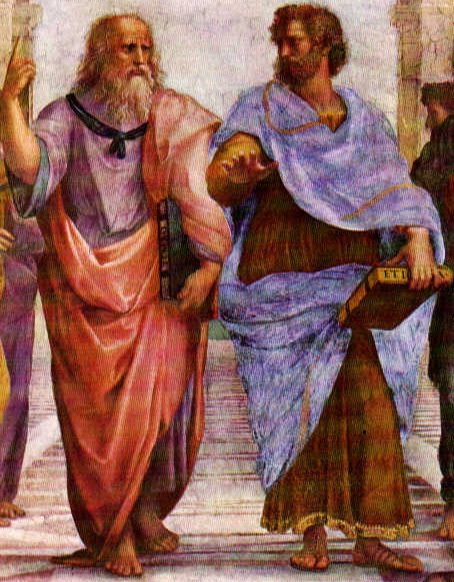
Skeptical about Skepticism
Does it Work?
The use of Skepticism as a tool is a prudent decision (or is it?), but Pragmatism's use of 'what works' is a much more viable and productive method in fulfilling the Skeptic's claim to be ever searching for truth.
Mortimer J. Adler, in his classic work How to Read a Book, after laying out the guidelines for effective, in-depth reading, ends the process with critiquing a work. The thing to note is that he states very clearly (on multiple occasions) that one should not pass any judgment whatsoever concerning the author's ideas until the entire book has been devoured and the ideas have been fully understood as the author intended for them to be understood (chapter 10). The concept is, how can you say you agree or disagree with something until you've grasped what that something is? Until the entire work is fully understood and one is able to (Adler would say 'obliged to') state whether one agrees or disagrees, the appropriate thing to do is to suspend judgment (which is also a viable 'critique', after attaining comprehension [chapter 11]). And we have now tapped into the Skeptic’s stance in life.
This permanent marker looks rectangular from one angle and circular from another. So which is it, what is its nature? When I'm sick my food tastes different then when I'm not. What is the nature of the food's taste? Red looks red to me, but what is the nature of 'red'--is it C# to you (Dr. Monast's idea, which is much cooler than saying 'my red or your blue')? None of these questions have a conclusive answer, for the thing judged is dependent on the one doing the judging who can only be a biased judge, that is, as someone within the situation. I can never experience your red, I can't experience something's taste outside of my tasting it when I'm either sick or healthy and I can only ever see the marker from angles within my three-dimensional perspective, with my eyes, in the visible light spectrum.
Concerning intangible things, as an example, an idea that was previously held as corresponding to reality ('the earth is the center of the universe') is now seen to be false; how do we know what we see as having correspondence now will not later? The scale of proof concerning God's existence versus nonexistence is equally balanced--for every point one side makes, the other finds a counter--; can I say God is or isn't real? In Adler's terms, since I don't 'fully understand the idea' of the nature of said things, I am obliged to continue to withhold judgment.
Sextus Empiricus claims to be, as a Skeptic, on the continuing search for truth (Outlines of Pyrrhonism [hereafter OP] 375), and repeats repeatedly (with repetitions) that his interest is the attainment of ataraxia, tranquility of mind, imperturbability of soul (OP 376). His view is that if someone takes a firm stance philosophically, they are bound to fearful running from 'evil' things and desperate clinging on to 'good' things (OP 378). But if it can be shown that we don't actually have the intellectual license to assent (or dissent) to something, that nothing can be said to be inherently 'good' or 'evil', true or false, then we can be at peace with the way things appear to be and what we have (speaking, of course, more broadly then just physical possessions); be at peace with knowing that we don't know (hello, Socrates).
To be skeptical is a wise thing; it would behoove us if we were more skeptical in our lives, not just taking for granted the things we see or are told. Take, for example, the taboo that is the study of philosophy in the Evangelical Christian world. If I had let what I had grown up hearing be my truth, I would not be doing the thing that is most natural for me to be doing. If I had not had an open mind when I came across a more accurate description of philosophy, I would have been letting propagated, uninformed opinions (redundant?) keep me from being me. The Skeptic, though, doesn't just use doubt as a tool. He makes it a way of life.
So how does a Skeptic live this life of epoche, of constant suspension of judgment? We've already demonstrated it--if a thing or idea can be shown to have an equally credible, contradictory thing or idea, then epoche!, both stances are now equally incredible (OP 376). Empiricus unfolds ten ways to find a contradiction, but the long and short of it is to either find a counter-example or show that a thing is only understood within the situation in which it is being evaluated, rendering its objective nature incomprehensible (OP 378-90). Our previous examples will suffice.
All of this sounds very Pragmatic--there is no absolute truth, or at least, if there is, there's no way that we can know we have found it (this statement itself not being absolute [OP 376, cf. William James' Conception of Truth {hereafter CT}]). But upon closer inspection, it can be seen that, while similar, Pragmatism is more effective in stimulating the search for truth, using 'what works,' whereas Skepticism tends to squelch it, more like a quest of doubt resulting in the cessation of intellectual inquiry. The two will be compared and contrasted in light of certain of Pragmatism's categories, or underlying principles.
Before we begin, what does the Pragmatist mean by 'what works'? 'Truth' is what works to satisfy desires (CT). That is a loaded statement that needs a lot of unpacking, which is beyond the scope of this piece, but the summation is if an idea has a practical application for the end which I seek, then that idea is a true one. Let us look at William James's hypothetical example of a man chasing a squirrel around a tree. Both creatures run around the tree in such a way as to never see each other. Does the man run around the squirrel as he runs around the tree? It depends. If you desire the man to have run north, east, south and west of the squirrel, then yes, it works to say he ran around the squirrel. If you desire the man to have run around the head, back, tail and stomach of the squirrel, then no, your desire is not satisfied, for he was always positioned in line with the squirrel’s belly. It doesn't work to say the man ran around the squirrel (What Pragmatism Means [hereafter PM]).
As was previously mentioned, both philosophies hold to the nigh infallibility of fallibilism (we can always be wrong) and, with that, the constant evolution of ideas (I daren't say knowledge), that is, 'truth' has always--and will ever--change (OP 378-9). What we 'know' today is outdated tomorrow, as we've seen in the realm of mathematics, natural science and of technology for the last couple of hundred years, even as recently as yesterday. What we were sure could never happen turns out to be commonplace, or what everyone is so sure to have happened, never actually did (take 'bra burning,' for example [[reference??]]). The difference is in what each philosophy does with both of these concepts. The Pragmatist will use what works while it works, holding on loosely, letting the currently held view of reality be his springboard into better understanding (CT), while the Skeptic, knowing that what he knows isn't really and can't be known, won't use it. He will spend his mental energies finding a way to discredit what is before him, he will catalyze the process of obsolescence without looking for a practical alternative; any alternative theories will be regarded just long enough to be disregarded. He will let appearances, i.e., what he experiences, end deeper inquiry—extinction, versus evolution. We're touching on the idea of radical empiricism, but we will hold off on a full analysis for the time being.
Both philosophies take the social standard into consideration in regards to how they conduct their lives. The Skeptic 'follow[s] a certain rationale that, in accord with appearances, points us towards a life in conformity with the customs of our country and its laws and institutions, and with our own particular pathe' (OP 377, emphasis added). The Pragmatist also binds his view of what works within the confines of the society in which he finds himself, that is, his idea of truth must cohere with what is the entire stock of truth held by the society (PM). Pluralism is at work, and not a relativistic 'I decide on my own what works and what doesn't.' Some instances may help. Neither a Skeptic nor a Pragmatist would, in the United States, walk around town in the nude, for that behavior is outside our culture’s standard of acceptable attire (though, if I understand correctly, a Cynic would have no problem with it). The Pragmatist would go one step further than mere conduct with his pluralism and say, e.g., that the world is not flat because science, mathematics and transportation technology have evolved our stock of truth; we know as a first world, at-least-in-theory educated country, that the world is round (though it can work to say, in limited, practical circumstances that the world is flat and not round—a flexibility that Skepticism doesn’t have [it would make no claim either way]).
While pluralism is important, relativity does have its part to play. William James introduces the Fringe in his Streams of Consciousness (hereafter SC). The Fringe is the sum total of all of one's interconnected experiences, mental and physical. I was raised by my family, with their ideals, in California, and I have learned all the things I've learned and have done or have had happen to me all the things that have occurred in my life. No one else can say they have had all the same experiences and thoughts as me, so no one can see the world exactly as I see it. Because I see the world how I see it, what I desire isn’t necessarily what you desire and, with that, what works for me doesn't necessarily work for you. It doesn't work for me to play video games all day, every day; I would spend my life doing something more intellectually or relationally significant. For the guys at my place of employment playing video games works. Empiricus also takes personal perspective into account when he says, 'But in putting forward these [seemingly, but non-dogmatic] slogans [e.g., "Nothing is true"] he is saying what seems to him to be the case and is reporting his pathos without belief, not firmly maintaining anything concerning what exists externally' (OP 376, emphasis added). The Fringe isn't a term he is used to, but it is an idea I think he would be comfortable with, being he takes into account subjective pathe.
An interesting thing to note is that James says that our experience is determined by what we elect to focus on, that is, we select what to notice of all that is going on around us (SC). E.g., being Roman Catholic, I am more apt to notice the bracelet of saints on the wrist of the clerk at the supermarket then a Buddhist would, for such things are relevant to me, but not necessarily for a Buddhist, even though we are both checked out by the same clerk. Empiricus, on the other hand, speaks of 'passively received phantasia [i.e., appearances]' (OP 377), treating experience as something that simply happens to us.
We can see, then, that our Fringe determines the growth of our Fringe, which can only happen if what composes our experiences are real, that is to say, nothing can't influence us, only something can do that, and for me, the experiences I have had are real, shown by the fact that they've really influenced me. This is where radical empiricism comes into play and where Skepticism and Pragmatism really part ways. Pragmatism holds that if something is experience-able it is real, and if it is real it is experience-able (Radical Empiricism). I might not ever know what this honey's flavor is independent of my own tongue, but there is a sweetness my tongue receives, and I'm interested in finding out what makes this honey sweet, even if just to me. It's real enough to stimulate thought and I will use what I have that works to find out ('there is a living spirit of "sweetness" inhabiting this honey') until what works doesn't cut it anymore (cue 'scientific advancement'), then I will find some other 'truth' that will work (a certain chemical compound reacts to certain receptors on a certain part of my tongue, stimulating a certain part of my brain, registering 'sweetness').
The Skeptic:
Those who claim that the Skeptics deny appearances seem to me not to have heard what we say. For...we do not reject the things that lead us involuntarily to assent in accord with a passively received phantasia, and these are appearances. And when we question whether the external object is such as it appears, we grant that it does appear, and we are not raising a question about the appearance but rather about what is said about the appearance… (OP 377)
He is saying, in a sense, that it works to say that what is experienced appears to be real, but there is no license to make the claim that it is, and it has been shown that he will make every effort, through his modes of epoche, to decimate any postulate concerning reality. He will go with the appearance of the sweetness of honey (OP 377), but since it tastes different to him when he is sick or healthy (OP 380), he won't assent to any idea regarding the nature of honey. I admit that he will use his experience for ‘what works’ to a limited, practical degree—he will eat and enjoy the honey. But any deeper investigation into, e.g., what Aristotle would call a thing’s causes (Physics), isn’t allowed even to get started, let alone flourish. 'Yes, it appears that way, but there's no need to go any deeper than the appearance, for we won't ever be able to know even if we tried.' The search stops. And if all attempts to gain a grasp on reality are undercut before one can get a leg up on understanding the nature of things, before any more-than-day-to-day practical advancement can be made, in an endless cycle of contradiction, what is left for one to do but to simply 'hold to appearances, then,...[and]...live without beliefs...in accord with the ordinary regimen of life [thinking, sensing, eating, following customs and taking up a craft], since we cannot be wholly inactive’ (OP 377, emphasis added, for that word implies the resignation to a life mostly inactive). It is reminiscent of Descartes who, playing the Skeptic, despite the fact that all the world may be maliciously contrived illusion, still got dressed and put logs on the fire, since it appeared necessary if he were to survive long enough to make his inquiry concerning the existence of God and the immortality of the soul, but who also, pragmatically, used what worked so as to progress deeper into said inquiry (Meditations on First Philosophy).
I can hear Empiricus now: 'Be a Skeptic—you'll never give yourself a chance to really live through philosophic and scientific exploration since you'll be spending all of your energy in both contradicting any and every idea that comes your way and in mere physical survival, but you will be able to just get through life without any satisfaction!'
While the Skeptic claims to be on the search for truth, what he is really doing boils down to being contrary toward all declarative and interrogative thought, putting an abrupt halt on all metaphysical and intellectual pursuit. A much more effective approach to epistemology is to do like the Pragmatist--use what works until it doesn't, then evolve.
[[Unrelated topic—I was curious as to whether or not our word ‘empirical’ comes from Sextus Empiricus, for his stance is quite empirical, so I did a little etymological research. It turns out that ‘Empirical derives from the Latin empiricus, which is a transliteration of the Greek empiricos (empirical, experienced; εμπειρικός) from empiria (experience; εμπειρία) from en- (in, with) + pira (experience, trial; πείρα), from the verb pirao (make an attempt, try, test, get experience, endeavour, attack; πειράω)’ (English words of no apparent Greek origin).
So it seems that Empiricus is more a title or description, and not a proper name. The question then remains, did he or his contemporaries dub him such, or was that a description that later, Latin-based students of philosophy eventually coupled to ‘Sextus’?]]
Works Cited
Adler, Mortimer J. Van Doren, Charles. How to read a book: The classic guide to intelligent
reading (1972, 2 ed). New York. Simon & Schuster.
Aristotle. Physics. Translated by R.P. Hardie & P.K. Gaye by permission of Oxford University Press, edited by Louis P. Pojman (1998). Classics of philosophy (2 ed). New York. Oxford University Press.
Descartes, Renee. Meditations on first philosophy. No translator given. 2009. New York.
Classic Books America.
James, William. ‘Conceptions of truth’ edited by Giles Gunn in Pragmatism and other writings.
2000. New York. Penguin Books 2000.
James, William. Essays in radical empiricism and a pluralistic universe. 1967. Gloucester,
MA. Peter Smith Pub Inc.
James, William. ‘Streams of consciousness’ edited by Giles Gunn in Pragmatism and other
writings. 2000. New York. Penguin Books 2000.
James, William. ‘What pragmatism means’ edited by Giles Gunn in Pragmatism and other
writings. 2000. New York. Penguin Books 2000.
English words of no apparent Greek origin. ‘Etymology of empirical-empiric.’ http://ewonago.blogspot.com/2009/02/etymology-of-empirical-empiric.html
Sextus Empiricus. Outlines of pyrrhonism. Translated by Benson Mates (1996) by permission of Oxford University Press, edited by Louis P. Pojman (1998). Classics of philosophy (2 ed). New York. Oxford University Press.
Thursday, March 18, 2010
Third Sun Rises
There is an old giant
who knows no surprises,
sleeps two days
and on the third sun rises
Plateaus were once mountains
that he squashed flat
and the seas are where
he washes his hat
He's so giant, in fact,
that he can't be seen
And it's impossible to explain
what that even means
The Kraken of lore,
we know that's not true
Funny, because that's what
this giant thinks of you
To him our story
has come and will go
Just another tale
in the endless flow
So he sleeps and rises,
he sits and he waits
And he won't be sure why
until it's probably too late
1/2/10
who knows no surprises,
sleeps two days
and on the third sun rises
Plateaus were once mountains
that he squashed flat
and the seas are where
he washes his hat
He's so giant, in fact,
that he can't be seen
And it's impossible to explain
what that even means
The Kraken of lore,
we know that's not true
Funny, because that's what
this giant thinks of you
To him our story
has come and will go
Just another tale
in the endless flow
So he sleeps and rises,
he sits and he waits
And he won't be sure why
until it's probably too late
1/2/10
Friday, October 23, 2009
Notre Dammit!
There's a lot of information behind this, but basically at Notre Dame's most recent graduation ceremonies, when President Obama spoke, a group of Pro-Lifers showed up to peacefully demonstrate in the interest of Life. Apparently 88 of them were arrested for trespassing, while none of the Pro-"Choicers" were.
Basically, this is a petition to the president of Notre Dame (a priest not living up to his calling, apparently), asking him to release the demonstrators. Please sign it.
http://www.tfpstudentaction.net/campaigns/notre-dame-drop-the-charges.html
Basically, this is a petition to the president of Notre Dame (a priest not living up to his calling, apparently), asking him to release the demonstrators. Please sign it.
http://www.tfpstudentaction.net/campaigns/notre-dame-drop-the-charges.html
Friday, September 25, 2009
An Ecumenical Effort
**This post contains spoilers to the Harry Potter series (particularly the final installment, and the Deathly Hallows). You have been warned**
This is all conjecture. Do with it what you will (except consume it with a grain of salt. That will hardly do anything for the flavor).
So we all know Rowling hails from the Presbyterian background (...right?) and we all know that the old Presbyters developed their theology from John Calvin, the sweetheart of a man who, unlike Martin Luther who sought reform, designed to completely break away from the established (thus, at that time, Catholic) church. Basically there was no love lost between those two groups, Calvinists and Catholics, that is, we are all of course aware of denominational disunity ("Oh, they can't be Christians, they...").
Ok, that's the set up. Let's build.
Severus Snape is forever oscillating in our minds from "good guy" to "bad guy." It's never clear where he stands. "If he's a good guy, which that action makes him out to be, why is he so mean to Harry that Harry can only hate him back, unless that's for his cover... but still, he doesn't have to be such a jerk," versus, "He's such a jerk. He obviously just did that seemingly good thing just to keep his position of double-double agent intact. He's covering his own ass and he's an ass, to boot!"
Then what happens? (This is where the spoilers come in. Stop teasing yourself if you haven't finished the stories yet. This will ruin it for you!!!). When Snape's ("Professor Snape's, Harry") life is forfeit, and he's in his final moments, he gives Harry his memories, which reveal that Snape's perpetual love for Harry's mom, Lily, was the driving force behind Snape's actual working-for-the-good-guys work. We see that, while Snape truly didn't like Harry for Harry's resemblance to his father James, and treated him thusly, Snape was doing all he could to subvert, and surreptitiously help Harry eventually end, Voldemort's reign of terror for love of Harry's mother.
In the epilogue, when Harry's son, Albus Severus Potter, is anxious about which House he will be sorted into ("...not Slytherin..."), Harry tells his son that he's named for two Hogwarts headmasters, one of which is from Slytherin, and "he's the bravest man I've ever known."
When Harry sees the fullness of gravity of the position Snape put himself in--and more importantly, why--he doesn't just say "Oh, cool. Snape was good after all. Sweet." No! His entire perception--thoughts and feelings--change. Snape is now the bravest man Harry knows. He now is filled with such respect and admiration for the man that Harry names his very son after him. Think about it. How could you think or feel anything but all of this for the person who loves your mother so much that he puts himself in the position of physical torture, mutilation and humiliation just for the memory of her, just for her progeny (who he personally hates!).
Rowling's message to the Calvinistic world (and Christian world at large)? How can Catholics, who we see as having perpetrated injustices throughout Church history (to say nothing of the injustices all denominations have perpetrated since the beginning of their own personal histories) and who we think are just off theologically really be as bad as we think they are when they love the Blessed Mother of Our Lord (Luke 1.43,48) as much as they do?
How indeed, Mrs. Rowling? How indeed?
([{And, Chris, Aaron, this isn't the piece I've alluded to. No, that one is far more brilliant and dazzling to look at (if it ever gets finished)}]).
Thursday, July 16, 2009
A note of praise
You allow for me to be who I truly am.
You have proven my worth through Your Incarnation, You have shown Your Love through Your Passion and You have redeemed my life through Your Resurrection.
Our nature is irrevocably united to Yours through Your Divine Person, the Son, the Eternal Word, Jesus the Christ.
Man is blessed in all Creation and every human person--an alloy of the Divine--shines like the sun and deserves every fiber of love the Divine can eek through me.
Lord, pick up my nature once more in Your Personhood and give me the grace to love with all of Us.
Amen+
You have proven my worth through Your Incarnation, You have shown Your Love through Your Passion and You have redeemed my life through Your Resurrection.
Our nature is irrevocably united to Yours through Your Divine Person, the Son, the Eternal Word, Jesus the Christ.
Man is blessed in all Creation and every human person--an alloy of the Divine--shines like the sun and deserves every fiber of love the Divine can eek through me.
Lord, pick up my nature once more in Your Personhood and give me the grace to love with all of Us.
Amen+
Tuesday, January 6, 2009
Stop Me if You’ve Heard This One…
**This conversation never actually took place**
During the Pope’s recent apostolic visit to the United States, while at a forum in Washington, DC, a Baptist minister stood up to test Benedict XVI.
“What must I do to be saved?”
“What is written in the Bible? How do you read it?”
“Accept Jesus into your heart as your personal Lord and Savior.”
The Pope said in reply, “You have answered correctly. Do this and you will live.”
But he wanted to justify himself and asked the Pope, “What does it mean to ‘accept Jesus into your heart’?”
In reply, the Pope said: “There was a poor man, a crackhead, on your streets. He came to the States from South America, because the living conditions back home were no longer viable. You see, a certain corporation moved their coffee bean field outside his village and the chemicals used to catalyze the growing process poisoned the water table underground, rendering all the well water in the region undrinkable.
“He knocked on the door of a church in the first major city he could hitchhike to, thinking to himself, ‘A Christian, and that in the Land of Opportunity, shall understand my plight and give me honest work.’ The man who answered the door, a right-wing evangelical pastor who bled Red-White-and-Blue, turned this man away for he was dirty and could not speak English. After repeated events such as this, the only work the man could find was dealing drugs to others in differing yet similar situations on the same harsh street.
“A representative from ACLU, doing an investigation on the poor living conditions of the residential motels in this man’s area, took pity on this man and fought to make sure this man, and those like him, had honest work and decent housing, despite his past, his economic status and his ability to speak the local language. This representative also connected with Green Peace to fight the unjust practices of the corporation who made this man’s homeland unlivable to begin with.
“Tell me, which do you think was the one who accepted Jesus into his heart?”
The minister replied, “The one who lived out John 13.35: ‘…you are my disciples if you love one another.’”
The Pope told him, “Go, and do likewise.”
**Note: As Jesus didn’t think priests and Levites were inherently bad (being He is the one Who founded their roles), so too this is not a blanket statement concerning right wing, patriotic evangelicals. The point (concerning this specific aspect of this piece) is that we need to make a distinction between cultural Christianity and real Christianity.**
During the Pope’s recent apostolic visit to the United States, while at a forum in Washington, DC, a Baptist minister stood up to test Benedict XVI.
“What must I do to be saved?”
“What is written in the Bible? How do you read it?”
“Accept Jesus into your heart as your personal Lord and Savior.”
The Pope said in reply, “You have answered correctly. Do this and you will live.”
But he wanted to justify himself and asked the Pope, “What does it mean to ‘accept Jesus into your heart’?”
In reply, the Pope said: “There was a poor man, a crackhead, on your streets. He came to the States from South America, because the living conditions back home were no longer viable. You see, a certain corporation moved their coffee bean field outside his village and the chemicals used to catalyze the growing process poisoned the water table underground, rendering all the well water in the region undrinkable.
“He knocked on the door of a church in the first major city he could hitchhike to, thinking to himself, ‘A Christian, and that in the Land of Opportunity, shall understand my plight and give me honest work.’ The man who answered the door, a right-wing evangelical pastor who bled Red-White-and-Blue, turned this man away for he was dirty and could not speak English. After repeated events such as this, the only work the man could find was dealing drugs to others in differing yet similar situations on the same harsh street.
“A representative from ACLU, doing an investigation on the poor living conditions of the residential motels in this man’s area, took pity on this man and fought to make sure this man, and those like him, had honest work and decent housing, despite his past, his economic status and his ability to speak the local language. This representative also connected with Green Peace to fight the unjust practices of the corporation who made this man’s homeland unlivable to begin with.
“Tell me, which do you think was the one who accepted Jesus into his heart?”
The minister replied, “The one who lived out John 13.35: ‘…you are my disciples if you love one another.’”
The Pope told him, “Go, and do likewise.”
**Note: As Jesus didn’t think priests and Levites were inherently bad (being He is the one Who founded their roles), so too this is not a blanket statement concerning right wing, patriotic evangelicals. The point (concerning this specific aspect of this piece) is that we need to make a distinction between cultural Christianity and real Christianity.**
Wednesday, November 26, 2008
Cloud Ripper
It wasn’t quite 5 and I was awoken by the alarm on Erik’s watch.
“How’d you sleep?” I eeked out.
“Ughh, I’m beginning to hate that question. Not very well. The wind was blowing dirt in my face all night.”
“Yeah, these little tents are awful.”
We placed and turned on our headlamps so we could put on as much of our gear inside the sorry-excuse-for-a-tent as we could before being forced into the cold of the early morning wilderness. I wasn’t too worried about it, though. My mind was captivated by the plan of the day. “This is going to be awesome.”
We crawled out from under the tarp held up by one little pole and tied down by 4 little stakes and saw our comrades doing the same. Off to my left, Zach was climbing out of his sleeping bag. “That guy has no interest in tents. Man, that’s hardcore.”
“Everyone ready? We’re gonna eat on the trail, so put your foodbars where you can reach ‘em,” said Jordan, our fearless leader for the day, as he was handing out our breakfast. A surge of nervous energy coursed through, if not the team, at least me. This was the first time I’d ever really been out in the wilderness, let alone would climb an actual mountain. Ah yeah.
That early in the morning, the only noise we heard was the rustling of synthetic pants and the stomping of heavy boots. I found myself colder than I had expected 20 minutes in, so when we stopped at a fork in the trail, I took the opportunity to put on the head-wrap I picked up in Jordan. I was probably the only ninja to have taken that trail in some time.
Jordan: “I think it’s this way.”
Fifteen minutes later, “No, it was the other way.” So back we went.
After twisting and curving and climbing and descending (but mostly climbing), we came out in a valley surrounded by mountain peaks. We had turned off our headlamps some time ago and with the position of the sun we could see all around. It was probably the most beautiful open field I had ever seen. We were walking alongside a little brook, there was tall brown grass covering the landscape, along the bed of the brook there were green bushes and around the perimeter of the valley were beautiful large, green trees. It was a good time to take a break and refill our water supply.
“How’s everybody doing?” Jordan asked just before we were to hit the trail again. “That’s our goal over there—Cloud Ripper.” He was pointing at one of the many peaks surrounding us. It wasn’t quite the farthest, but it was definitely the tallest.
Now that we were all wide-awake and back in the groove of trekking, you could hear us a mile away. This trek was a part of our “Intro Trip,” in the first week of our Wild DTS (that is, Discipleship Training School). We were still getting to know each other. Erik, who wound up being my best friend in the school, was from Tennessee, just outside of Nashville. I took to calling him a hippy, although he was really only “Granola.”
The more we walked, the less easily discernable path we had. We came upon mostly rocky ground, with some trees interspersed here and there. Our guide now was simply a path of karyns, little piles of rocks stacked on top of each other, marking out the trail.
We stopped at the base of a mountain made up entirely of, so it seemed, jagged, grey rocks varying in size from 1 foot across to the size of a very large man. “We’re at a saddle, which is the lowest point between two mountain peaks. If we were trying to cross the mountain, this is where we’d do it. We’re going to climb to the top of the saddle then walk along it to get to our peak. We’re going to climb making switch-backs (instead of climbing straight up against the steep grade of the mountain, we make wide zig-zags up the slope). And watch your fall line. Don’t climb directly under someone above you and make sure you aren’t climbing with someone in-line under you. These rocks are very loose and very dangerous. If you happen to kick one loose, yell ‘Rock!’ to let those below you know. We’ll take another break once we’re up the saddle.”
Off we went. Now, I’m pretty good about taking the advice of people who know what they’re talking about. I usually do, just not always. This was definitely one of the “not always” times. After zigging and zagging for a bit, feeling like I was going nowhere, and the appearance of our goal seeming, from my angle, not too far off, I decided to go for it. I threw myself up the slope, clambering for the top of the saddle. It took less than 7 minutes for me to resort to switching back again. Man, that bolt wore me out. I even had to take off my ninja head wrap.
I can’t tell you how much time it took for us to make it to the top of the saddle, but it definitely took some! As we were climbing, we all looked around, checking each other’s progress, yelling out encouragements as needed and calling out warning due to falling rocks. We slowly made it, one by one, and took a much-needed rest. Despite our weariness, our excitement only grew after the victory of this first leg. And I’ll tell you what, for as cold as it was making our way to the mountain, it was nothing compared to the chill and wind of being on that saddle. The wind was blowing so strongly that, when we jumped straight up, we would land a couple feet back from where we started. It was a little scary being on the top of a steep, rocky slope with powerful wind wanting to blow us back down. And that’s exactly why I was loving it. Well, the danger and the magnificent view. The field in the valley on the side we came up looked so beautiful, with the brook running through it, splitting here and there, coming back together; the giant white and grey rocks strewn about; the patches of green trees. The other side’s view was of grey rocks and brown dirt and 3 or 4 giant blue lakes. The land stretched for miles, as did the mountain range. We could even see trails on the distant mountains.
We took some pictures, I grabbed a rock for my mom (I still haven’t given it to her), I put my Jordanian ninja-wrap back on and off we went. The terrain didn’t change much as we walked across the spine of this mountain, ever nearer its peak. It just got steeper. And steeper.
As we snaked along from peak to peak, on the very ridge of the mountain, I became quite familiar with a mountaineering term that you may not have heard. Do you know what a “false peak” is? A false peak, or false summit, is, while looking up the mountain while hiking, you can’t see any mountain above and beyond a certain peak. You think that the peak you are now climbing towards is the highest point of the mountain, that this is your goal. Well… you’re wrong. Once you painstakingly make it to that point, you see beyond it much more mountain to go. So you go. And you get duped time and time again. I got to the point of not caring. “Whatever. I’m not going to get excited anymore! I’ll climb till I’m done climbing!” So I did. False peak, wrong peak, whatever. Keep moving!
At one point, there was a giant patch of what was once snow, but was now ice in the guise of snow, on the north side of the peak. Because it was out of the sun, it never thoroughly melted. It would just melt enough to be re-frozen during the night, making it densely packed ice. We still tried to scrape it into balls and pelt each other. A couple of us guys even wrote our names, *a-hem*.
Upward and onward we climbed. We came to a small collection of peaks, each within 100 or so feet of each other. We took a second to gauge which was the highest, then found it! The peak of Cloud Ripper! Just over to the west, not 200 feet away! We all made a mad scramble to the peak, throwing caution to the wind! (Not really, we were always very safe). We had newfound energy with the exhilaration coursing through our veins.
At long last, at the very least 4 hours since we left camp, we did it! We stood in triumph! We had bagged the mountain! All 13,501 feet of Cloud Ripper was now under my belt. I had climbed my first mountain!
I even made a point to sit (I dare not stand!) on the pinnacle of the pinnacle! There was also a journal in a watertight container lodged in the rocks at the top. We each joined the list of names of all the people who had come before us. I left a little note, too. I don’t remember exactly what it said, but something about the goodness, glory and beauty of God.
This was the first week I had ever gone backpacking in my life. It was the first time I had done any real physical exertion since junior high. I had smoked my last cigarette only days before this trek. It had only been 7 months since I came back to God, giving up my intentional, out-right rebellion and smoking crystal meth. Despite all of that, God Himself gave me the grace to kick my own ass and know Him, love Him, follow Him, learn from Him and enjoy Him at the peak of this mountain, in the middle of the Eastern Sierra Nevada Mountain Range.
The view before, back on the saddle, was nothing compared to the view atop Cloud Ripper. We could see miles and miles of mountaintops stretching all around us. We could see lake after lake peppering the landscape. And, in the style of our mountain’s namesake, we were enveloped by clouds all around us. I wanted to grab one like Jasmine, in Aladdin, but alas, they weren’t that close. God is beautiful and God is strong. If ever you have doubts, just look at His creation. It’s a reflection of Him, so we can know and love Him better.
After some more pictures, we descended less than 50 feet, so as to get out of the harsh wind, ate an energy packed snack and began our long journey back to camp.
“How’d you sleep?” I eeked out.
“Ughh, I’m beginning to hate that question. Not very well. The wind was blowing dirt in my face all night.”
“Yeah, these little tents are awful.”
We placed and turned on our headlamps so we could put on as much of our gear inside the sorry-excuse-for-a-tent as we could before being forced into the cold of the early morning wilderness. I wasn’t too worried about it, though. My mind was captivated by the plan of the day. “This is going to be awesome.”
We crawled out from under the tarp held up by one little pole and tied down by 4 little stakes and saw our comrades doing the same. Off to my left, Zach was climbing out of his sleeping bag. “That guy has no interest in tents. Man, that’s hardcore.”
“Everyone ready? We’re gonna eat on the trail, so put your foodbars where you can reach ‘em,” said Jordan, our fearless leader for the day, as he was handing out our breakfast. A surge of nervous energy coursed through, if not the team, at least me. This was the first time I’d ever really been out in the wilderness, let alone would climb an actual mountain. Ah yeah.
That early in the morning, the only noise we heard was the rustling of synthetic pants and the stomping of heavy boots. I found myself colder than I had expected 20 minutes in, so when we stopped at a fork in the trail, I took the opportunity to put on the head-wrap I picked up in Jordan. I was probably the only ninja to have taken that trail in some time.
Jordan: “I think it’s this way.”
Fifteen minutes later, “No, it was the other way.” So back we went.
After twisting and curving and climbing and descending (but mostly climbing), we came out in a valley surrounded by mountain peaks. We had turned off our headlamps some time ago and with the position of the sun we could see all around. It was probably the most beautiful open field I had ever seen. We were walking alongside a little brook, there was tall brown grass covering the landscape, along the bed of the brook there were green bushes and around the perimeter of the valley were beautiful large, green trees. It was a good time to take a break and refill our water supply.
“How’s everybody doing?” Jordan asked just before we were to hit the trail again. “That’s our goal over there—Cloud Ripper.” He was pointing at one of the many peaks surrounding us. It wasn’t quite the farthest, but it was definitely the tallest.
Now that we were all wide-awake and back in the groove of trekking, you could hear us a mile away. This trek was a part of our “Intro Trip,” in the first week of our Wild DTS (that is, Discipleship Training School). We were still getting to know each other. Erik, who wound up being my best friend in the school, was from Tennessee, just outside of Nashville. I took to calling him a hippy, although he was really only “Granola.”
The more we walked, the less easily discernable path we had. We came upon mostly rocky ground, with some trees interspersed here and there. Our guide now was simply a path of karyns, little piles of rocks stacked on top of each other, marking out the trail.
We stopped at the base of a mountain made up entirely of, so it seemed, jagged, grey rocks varying in size from 1 foot across to the size of a very large man. “We’re at a saddle, which is the lowest point between two mountain peaks. If we were trying to cross the mountain, this is where we’d do it. We’re going to climb to the top of the saddle then walk along it to get to our peak. We’re going to climb making switch-backs (instead of climbing straight up against the steep grade of the mountain, we make wide zig-zags up the slope). And watch your fall line. Don’t climb directly under someone above you and make sure you aren’t climbing with someone in-line under you. These rocks are very loose and very dangerous. If you happen to kick one loose, yell ‘Rock!’ to let those below you know. We’ll take another break once we’re up the saddle.”
Off we went. Now, I’m pretty good about taking the advice of people who know what they’re talking about. I usually do, just not always. This was definitely one of the “not always” times. After zigging and zagging for a bit, feeling like I was going nowhere, and the appearance of our goal seeming, from my angle, not too far off, I decided to go for it. I threw myself up the slope, clambering for the top of the saddle. It took less than 7 minutes for me to resort to switching back again. Man, that bolt wore me out. I even had to take off my ninja head wrap.
I can’t tell you how much time it took for us to make it to the top of the saddle, but it definitely took some! As we were climbing, we all looked around, checking each other’s progress, yelling out encouragements as needed and calling out warning due to falling rocks. We slowly made it, one by one, and took a much-needed rest. Despite our weariness, our excitement only grew after the victory of this first leg. And I’ll tell you what, for as cold as it was making our way to the mountain, it was nothing compared to the chill and wind of being on that saddle. The wind was blowing so strongly that, when we jumped straight up, we would land a couple feet back from where we started. It was a little scary being on the top of a steep, rocky slope with powerful wind wanting to blow us back down. And that’s exactly why I was loving it. Well, the danger and the magnificent view. The field in the valley on the side we came up looked so beautiful, with the brook running through it, splitting here and there, coming back together; the giant white and grey rocks strewn about; the patches of green trees. The other side’s view was of grey rocks and brown dirt and 3 or 4 giant blue lakes. The land stretched for miles, as did the mountain range. We could even see trails on the distant mountains.
We took some pictures, I grabbed a rock for my mom (I still haven’t given it to her), I put my Jordanian ninja-wrap back on and off we went. The terrain didn’t change much as we walked across the spine of this mountain, ever nearer its peak. It just got steeper. And steeper.
As we snaked along from peak to peak, on the very ridge of the mountain, I became quite familiar with a mountaineering term that you may not have heard. Do you know what a “false peak” is? A false peak, or false summit, is, while looking up the mountain while hiking, you can’t see any mountain above and beyond a certain peak. You think that the peak you are now climbing towards is the highest point of the mountain, that this is your goal. Well… you’re wrong. Once you painstakingly make it to that point, you see beyond it much more mountain to go. So you go. And you get duped time and time again. I got to the point of not caring. “Whatever. I’m not going to get excited anymore! I’ll climb till I’m done climbing!” So I did. False peak, wrong peak, whatever. Keep moving!
At one point, there was a giant patch of what was once snow, but was now ice in the guise of snow, on the north side of the peak. Because it was out of the sun, it never thoroughly melted. It would just melt enough to be re-frozen during the night, making it densely packed ice. We still tried to scrape it into balls and pelt each other. A couple of us guys even wrote our names, *a-hem*.
Upward and onward we climbed. We came to a small collection of peaks, each within 100 or so feet of each other. We took a second to gauge which was the highest, then found it! The peak of Cloud Ripper! Just over to the west, not 200 feet away! We all made a mad scramble to the peak, throwing caution to the wind! (Not really, we were always very safe). We had newfound energy with the exhilaration coursing through our veins.
At long last, at the very least 4 hours since we left camp, we did it! We stood in triumph! We had bagged the mountain! All 13,501 feet of Cloud Ripper was now under my belt. I had climbed my first mountain!
I even made a point to sit (I dare not stand!) on the pinnacle of the pinnacle! There was also a journal in a watertight container lodged in the rocks at the top. We each joined the list of names of all the people who had come before us. I left a little note, too. I don’t remember exactly what it said, but something about the goodness, glory and beauty of God.
This was the first week I had ever gone backpacking in my life. It was the first time I had done any real physical exertion since junior high. I had smoked my last cigarette only days before this trek. It had only been 7 months since I came back to God, giving up my intentional, out-right rebellion and smoking crystal meth. Despite all of that, God Himself gave me the grace to kick my own ass and know Him, love Him, follow Him, learn from Him and enjoy Him at the peak of this mountain, in the middle of the Eastern Sierra Nevada Mountain Range.
The view before, back on the saddle, was nothing compared to the view atop Cloud Ripper. We could see miles and miles of mountaintops stretching all around us. We could see lake after lake peppering the landscape. And, in the style of our mountain’s namesake, we were enveloped by clouds all around us. I wanted to grab one like Jasmine, in Aladdin, but alas, they weren’t that close. God is beautiful and God is strong. If ever you have doubts, just look at His creation. It’s a reflection of Him, so we can know and love Him better.
After some more pictures, we descended less than 50 feet, so as to get out of the harsh wind, ate an energy packed snack and began our long journey back to camp.
Wednesday, June 4, 2008
Homeless Jim

Ok, so he wasn't actually homeless. But I christened him Homeless Jim shortly after meeting him (although, I don't think he ever knew that that's what I called him).
You all know him (if you've spent any time at Borders whatsoever). He was the 64 year old man with straggly grey hair and a big, bushy beard (usually... sometimes he kept it trim). He was the gentleman in the dirty jacket with all of the plastic bags who had the same routine every morning (at least when I worked at Borders).
He would come in just as the store was opening (sometimes he'd be off to the side smoking a cigarette, if he happened to arrive early). Whether he was out front or was walking in as I was getting the cafe ready for the day, it was always the same.
"Hey, man. How's it going?"
"Aay, all right."
"Anything new?"
"*gruffy*NAAAH, nothing. ...Oh, did you hear about [this thing in the news]?"
"No, what's up?"
"Oh, these sh*theads in Sacramento... I mean, my God, could they be any more brain dead?"
"Man, that's crazy."
"Yeah. ...So you gonna do any work today?"
"Don't count on it."
"*gruffy*YEAH, figures!"
"All right, I'll be talkin' to ya."
"Yeah."
He'd get his coffee (and sometimes a bagel, depending on how generous other customers had been that week, or how lucky he was to find some cash or a gift card), grab a couple different newspapers, sit at the same table he always sat at and read.
Sometimes we'd get to talking about different restaurants in California or he'd tell me his recipe for a mean lasagna ("Now a good lasagna takes 2 days to make...") or we'd just shoot the breeze, talking about nothing.
He made sure that I knew every group of people that came in to Borders that he didn't like, from the "gimps" to the "fags." I'd always say, "hey, come on, man. they're people, they're cool." He always made sure I knew, but he never pushed it. And believe it or not, before I quit working there, there was even a mentally challenged, regular customer that Jim bought a coffee for! Can you believe that? Bitter old man with a soft heart!
Jim was probably my favorite reason for coming in to Borders. I loved to harass him (but only as payback!). He'd be sitting in his other regular chair (after reading the papers and having a smoke, he'd come in to the ring of cushy chairs, sit at the same one, every day, and read books on World War II, the weapons, technology and vehicles used during said war, books about old time actors and singers, magazines on cars and, more often than not, he'd be reading good, ol'-fashioned comic books [even the newer ones]) and I'd sneak up behind him and put a magnetic strip on his shoulder, so when he'd go outside for his next cigarette, he'd set off the alarm. I was always quick to let every one know what was going on so he wouldn't get in any real trouble.
Other times I would sneak up behind him (always with the sneaking!) and try to surreptitiously snatch his plastic bags that contained all of his belongings. Sometimes I'd pull it off, other times I wouldn't. Either way, it was always fun (even if he acted angry). The coolest part about that was getting the other customers involved. They would be sitting around us, as well, and we'd catch eyes as I was grabbing the stash, then they'd look at Jim, look at me with a wry grin, look down at their book, peak over at Jim. Whether I'd get busted or not, we'd all share a laugh, or at least a smile. Ah, the community at Borders.
I was constantly in effort to earn gold stars from Jim. There was a Harry Potter book release event and countless little plastic, gold stars were strewn all about the store. If ever I did something that met his approval (which was rare [but not really]), he'd give me a star. If I did something he didn't like, he threatened to take them away and give them to Molly, a co-worker of mine. I acted like I wouldn't care if he took them away, hoping that maybe, that way, he wouldn't.
Jim was always there to share a laugh, a joke, a recipe ("...then you just add salt to taste"), directions to this awesome, hole-in-the-wall restaurant in Timbucktoo, just off the coast, or to threaten me or ask my wife (well, my soon-to-be at the time) if she needed him to beat me up.
For being a crotchity, old man, he had a lot of friends. There were us, of course, then there were my friends, Aaron, Jimmy and Chris, who I introduced him to, then there were all of the other regular customers who had gotten to know Jim over the years, sitting at Borders. There were Barb and Charlie, Orthodox Mike, there was Ron, the other old guy who would come and play pinochle with him. There were countless other customers who would buy him a drink or a bagel, bring him a Christmas gift or a birthday card (November 7th) or just hang out with him for a little while. Even an old Borders employee, David, would come and smoke with him, always leaving a handful of cigarettes in Jim's pocket before taking off.
I'll tell you one thing, though. Jim didn't always just take. He gave me himself in friendship. He let me in on aspects of his life that I'm sure he didn't share with just anybody. He loved me and my wife and our friends, even if he didn't always know how. One time, around Christmas, after finding $100 in the street, he even took my wife and me out to lunch. I'll never forget the cashier's face at Boston Market when, after ordering all of this food and expecting the money to come from my wallet, it came from this homeless guy's. Big, selfless jerk.
So I got a call last night, about 9 o'clock. It was from Barbara, the regular from Borders. She wanted me to know that, since she knew Jim and I were friends, Jim was in the hospital. He had an infection in his blood, as well as heart, kidney and lung problems. Even though they knew of no family, the nurses were going to let anyone see him who wanted to see him.
Here's the craziness of that. Barbara saw us with him Wednesday night (which is what made her think of us last night) because we, last minute decision, went to Borders to hang out with another friend of ours. After taking him to the hospital, she talked to an old manager at Borders, Neal, to get my home number. Completely illegal, but totally awesome: he gave it to her. She called the house, talked to my parents, who just so happened to be home, and they gave her my cell phone number. We talked to Barb and got down there around 9.45. By the grace of God, 2 sets of people cleared us to go see him. All of these intricate details worked out so precisely so we could see him in his final hours. God loves us. He loves all of us.
So we got to talk to him. He had tubes and pipes poking in every-which-where as well as tape holding the breathing tube coming from his mouth in place. He wasn't able to talk, but he could understand us. The entire time, his eyes had tears wanting to burst forth.
Rhiannon and I told him we were with him. I made a few stupid, awkward jokes ("So, can I have your Batman hat now?"), but otherwise didn't know what else to say. We made sure he knew, if not before, then now, for certain, no question about it, that we love him. He tapped his nose. As clearly as I could, feeling stupid and embarrassed and afraid I would be harassing a dying man, that, anything and everything he saw in my life that was good or beautiful or loving, especially in our relationship, that all of that is the love Jesus has for me spilling on to him. Somewhere in all of my blabbering, he tapped his nose. "There's probably a lot of stuff in your life that you feel dumb about. It's all good, man. All you need to do is let Jesus love you." (I pray that I was that clear in our actual conversation.)
He was fighting his breathing machine and he kept bending his arm that had the IV hooked up to it (blocking the flow). The whole time, different nurses and attendants kept walking in and out. I could tell he was scared. I held his hand for a good, long time. The first time I tried to caress his head, he turned away.
The whole time Rhiannon, who was in an extreme amount of pain herself, but still opted to see Jim instead of going home to take medicine, was right with me. She told Jim she loved him and was by my side, caressing my back the entire time. She stepped out, for just a minute and at my request, to call Chris and update him on all of the goings-on. When she came back in, I was at Jim's other side, holding that hand, so he'd keep his IV arm straight (ornery old man).
Finally, Jim looked me in the eye. He did more than look. He locked. We barely broke eye contact for 10 minutes. And this time, when i caressed his head, he didn't turn away. I don't understand "eyespeak," but I'm sure he was thanking us for coming and who knows what else. His sad, blue, tear-filled eyes. I pray that he let himself see the love of Jesus.
I started to tell him about how Rhiannon and I met. I gave him a little personal history, touched on all of my sordid affairs, and was about to get in to actually meeting Rhiannon, when the nurse came in and said it was time to go. She needed to give him a bath. I kissed his hand and told him I'd come back later to finish the story.
We left right when our friends arrived. Chris, Jimmy and Aaron showed up to the hospital to show Jim they were with him and that they loved him, too. They weren't allowed up, but I pray he was told they came.
I set my alarm for 2 in the morning, so I could call and check up on him. My alarm went off and I went straight back to sleep.
I called at 7.30, when I actually got up, to discover that he had died at about 3, just an hour after I would have called him. Naturally, I felt like an idiot for not coming through for him, in his final moments.
The cry of our hearts (ALL of our hearts, Rhiannon's and the guys') was that he wouldn't die alone, that someone (physical, spiritual or Divine) would be with him in his final moments. Rhiannon and I cried out our sorrow that this is a world where people have to die alone. We all prayed that Jesus would be with him and that he would receive the God Who loves him. I was angry with myself because I wasn't an answer to my own prayer, so I could get 10 seconds extra sleep.
The guys told me that, so the story goes, while no one wants to be alone when they die, they are truly, really comforted in knowing that they're not alone in the general sense, in the "people care about me even if they're not standing next to me as I pass" sense. In fact, most people wait to die until the people that are with them leave the room.
It was an honor knowing Homeless Jim. I had a great time being in his life and loved that he was in mine. It humbles me that I, some punk who loves Jesus, could bring him peace, joy and comfort, most especially in his final hours, just by loving him as imperfectly as I can, in the style of Jesus, Who loves us so perfectly.
The coroner's office have found a surviving child (adult) in Hollister. We've yet to see how that has turned out. There is a memorial service in the works, hopefully at Borders, and there's talk of a collection for donation to the Gospel Mission in his name.
Walter James "Homeless Jim" Worsham (had no idea, did ya? Walter?!), may the peace of Christ be with you and may our Lord welcome you into His Kingdom. Amen.
The nurse I talked to this morning, based on all of the people who came to see him in his short time in the hospital (8, by my count), after telling me that he passed said, "He must have been a sweet, old man."
"Yeah."
I didn't have the heart to tell her the truth.
Friday, May 30, 2008
long time, no see
yeah, yeah. i know. but here i am.
so things are going really well. we're having fun being married, learning to hash out everything that comes our way and growing more and more in love by the day. you cant beat that!
ywam is going well. rhiannon has been working on a couple of paintings that she is just about finished with. once she's done we'll get them online.
we're now spending time (or at least wanting to, being so busy!) studying and learning more about the Kingdom of God on Earth through all of its different Traditions and expressions. we have a beautiful, rich and diverse History.
and of course, we're in the process of making our own. be Free to love and serve the Lord... and each other.
so things are going really well. we're having fun being married, learning to hash out everything that comes our way and growing more and more in love by the day. you cant beat that!
ywam is going well. rhiannon has been working on a couple of paintings that she is just about finished with. once she's done we'll get them online.
we're now spending time (or at least wanting to, being so busy!) studying and learning more about the Kingdom of God on Earth through all of its different Traditions and expressions. we have a beautiful, rich and diverse History.
and of course, we're in the process of making our own. be Free to love and serve the Lord... and each other.
Wednesday, October 24, 2007
OUCH!
this just struck me...
back in the day, baptism was only for Gentile, pagan converts into Judaism and THAT is why (at least in part) Jesus had to be baptized to fulfill all things. He came to abolish the division between Jews (God's people) and Gentiles (those outside of real relationship with God). In fulfilling all of the Law, He had to cover the bases for those who needed to enter into the Law in the first place.
just one more layer of understanding. Jesus rocks.
back in the day, baptism was only for Gentile, pagan converts into Judaism and THAT is why (at least in part) Jesus had to be baptized to fulfill all things. He came to abolish the division between Jews (God's people) and Gentiles (those outside of real relationship with God). In fulfilling all of the Law, He had to cover the bases for those who needed to enter into the Law in the first place.
just one more layer of understanding. Jesus rocks.
Tuesday, October 2, 2007
oh, glorious day!


yeah. i'm engaged. deal with it. just kidding.
so rhiannon and i are officially french, and by that, i mean we are fiancesesz. we're engaged. yeah yeah.
there we go.
Sunday, September 30, 2007
that's right...!
so here i am, being welcomed into the Catholic church. that's what i'm talking about! have a good morning, everyone. i know i will!
Subscribe to:
Posts (Atom)

